
Bagpipes
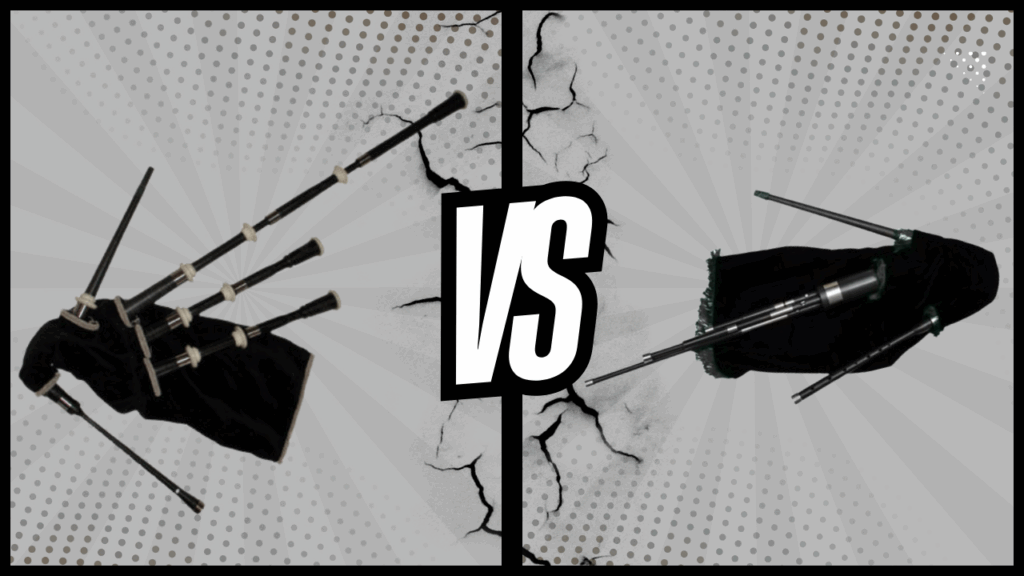
Great Highland Bagpipes vs. Scottish Smallpipes: Sound, Setup, and Where Each Shines
Sep
The world of bagpipes is rich with history and variety, but two instruments stand out in Scottish tradition: the Great Highland Bagpipes and the Scottish Smallpipes. Both share a cultural heritage and similar fingerwork, yet they differ in sound, setup, and purpose. Understanding these differences can help players and listeners appreciate the strengths of each.
Sound and Tone
The Great Highland Bagpipes are known for their powerful, resonant sound. With three drones and a chanter pitched sharp of B flat, they project across open fields, parades, and ceremonies. Their bright and commanding tone has made them the voice of Scotland for centuries.
Scottish Smallpipes, by comparison, offer a gentler and more intimate sound. Usually pitched closer to A, they blend beautifully with other instruments in session settings. Their quieter, warm tone makes them well-suited for indoor gatherings and recording environments.
Setup and Playability
Highland bagpipes demand strong breath control and steady pressure on the bag. Their reeds are sensitive to moisture and climate changes, which can require frequent adjustments. The reward, however, is unmatched projection and presence.
Smallpipes, on the other hand, are often bellows-blown rather than mouth-blown. This makes them easier on the lungs and provides steadier air pressure. Their reeds are typically more stable and forgiving, allowing pipers to spend less time adjusting and more time playing. The fingerwork remains familiar to Highland players, making the transition between instruments smooth.
What They Share in Common
Despite their differences, the Great Highland Bagpipes and Scottish Smallpipes are united by key features that define the bagpipe family. Both use drones to create a continuous harmonic foundation, producing the unmistakable sound associated with Scottish piping. Each instrument relies on the same nine-note scale and traditional fingerwork, enabling pipers to transition between them without needing to learn an entirely new system. Ornamentation, such as grace notes and embellishments, also transfers seamlessly, meaning skills developed on one type of bagpipe strengthen the ability on the other.
Where Each Instrument Shines
- Great Highland Bagpipes: Outdoor ceremonies, parades, and military events; competitions and solo showcases; performances where volume and power are essential.
- Scottish Smallpipes: Indoor music sessions, recording projects, practice at home, and ensemble performances where a softer tone is preferred.
Many pipers find that having both instruments provides the flexibility to perform in a wide range of settings.
Tradition Meets Innovation
Traditionally, both Highland pipes and Smallpipes were made of wood, which, while beautiful, is prone to cracking, warping, and moisture issues. At Carbony Celtic Winds, we have taken these centuries-old instruments and reimagined them with carbon fiber construction. This material is lighter, more durable, and resistant to environmental damage. The result is a set of pipes that delivers the rich, authentic sound that players expect, while offering consistency and reliability that wooden instruments cannot match.
We offer the Great Highland Bagpipes in competition pitch, Bb, and A. We also carry Scottish Smallpipes in both mouthblown and bellows version, and your choice of chanter key.
At Carbony, we are committed to preserving the heritage of Scottish piping while providing musicians with instruments built to meet today’s demands. Our carbon fiber Great Highland Bagpipes and Scottish Smallpipes provide the tone you love with the durability you need. Browse our FAQ page for common questions and explore our collection online today!
